
The agritourism vision
Oceanside built an agritourism vision to help farming survive, not to replace it.
The city studied agritourism, adopted part of it into the zoning ordinance, and set the larger questions aside for a community plan. That plan, once completed, is meant to accommodate both agritourism and housing while preserving agricultural resources and the long-term viability of farming. Understanding that vision, and where it stands today, is the clearest way to see what is at stake in South Morro Hills.
We are grateful to the City, the farmers and property owners who took part in the workshops, and everyone who helped build this vision over the past decade. Our purpose is to uphold it: to see it carried forward as development pressure has grown well beyond what its original safeguards anticipated, and to keep this land in farming.
Everything on this page is drawn from public plans, public meetings, and public code.
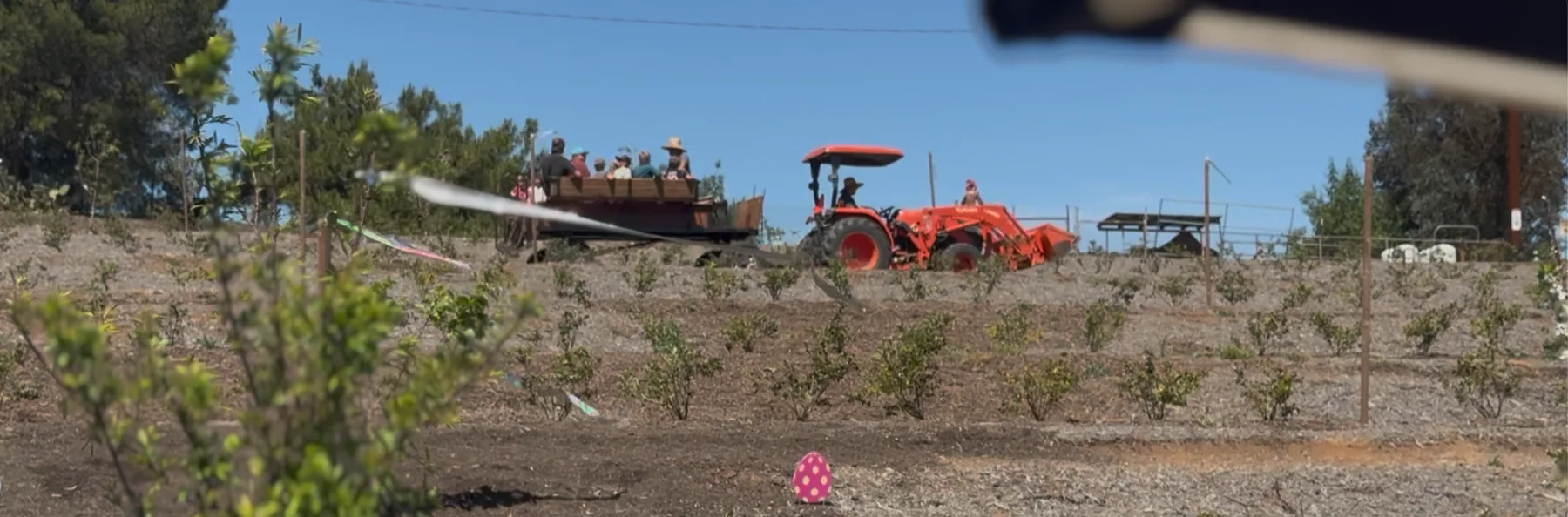
How the vision was built
-
2015
At the request of the City's Economic Development office, the City Council authorized an Agritourism Strategic Plan: create an agritourism segment in South Morro Hills and provide supplemental revenue so farmers could keep farming.
-
2016
The plan, prepared by SMG Consulting, was authorized for implementation with an emphasis on public outreach, marketing, education, and branding. An agritourism steering committee was formed of city staff, Visit Oceanside, local farmers, and property owners.
-
2016–2017
Visit Oceanside led three public workshops introducing agritourism, sharing case studies, and covering how to start.
-
2018
The City Council adopted zoning ordinance amendments introducing agritourism and its lower-intensity (Tier 1) activities.
-
2019
In response to a large planned development in South Morro Hills, the City Council directed staff to prepare the South Morro Hills Community Plan and to limit further development beyond existing General Plan and zoning until that plan was ready. The vote was unanimous.
-
Current
The South Morro Hills Community Plan is on hold, and it is not covered by the city's General Plan Update environmental review.
The two tiers
The plan sorted agritourism by intensity and investment. One tier was adopted. The other was left for the community plan to decide.
Tier 1 · adopted 2018
Lower intensity, lower investment
- Cafes, wineries, breweries, and distilleries tied to on-site production
- U-pick operations and petting zoos
- Farm stands
- Farmstays and small bed and breakfasts
- Incidental retail, food processing, or tasting tied to production
Adopted into the zoning ordinance in 2018. These uses fit alongside a working farm.
Tier 2 · never planned for
Higher intensity, higher investment
- Hotels
- Festivals
- Larger retail
- Event venues
Potentially requiring new public infrastructure. Never planned for. The Community Plan was meant to decide how, or whether, Tier 2 fits. That plan is on hold.
Why the tiers matter
Agritourism was designed to be subordinate to active farming, calibrated by intensity, with the biggest uses deferred until a real plan existed. That sequence was the safeguard, and it was a thoughtful one for its time.
Development pressure has since grown well beyond what that sequence anticipated. The risk today is Tier 2-scale commercial activity, event venues in particular, arriving parcel by parcel through individual permits before the community plan defines the rules, and without the working-farm foundation the vision assumed.
The remedy is not a new vision. It is finishing the plan the city already called for, applied before the precedents accumulate.
The parties who shaped it
City of Oceanside
City Council, Economic Development office, and Planning Division.
SMG Consulting
Author of the Agritourism Strategic Plan.
Visit Oceanside
Marketing and education, including the public workshops.
Steering committee
City staff, Visit Oceanside, local farmers, property owners, and the South Morro Hills Association.
Community plan process
The South Morro Hills Community Plan, directed in 2019.
These are public bodies and public processes, listed as matters of public record.
Know the code
The rules that matter, in plain language
Article 14
Agricultural zone
- Weddings and assembly-type events are not allowed by right.
- They require a discretionary permit with public notice, findings, and conditions.
- Amplified sound is allowed only in conjunction with such a permit.
- Agritourism must remain subordinate to active, viable farming.
- A permit requires a finding that the use will not be detrimental to nearby residents or create a nuisance.
Chapter 38
Noise ordinance
- In agricultural and residential zones: 50 decibels daytime, 7am to 10pm.
- 45 decibels at night, 10pm to 7am.
- Sound plainly audible at 50 feet is treated as a violation.
CEQA
Cumulative impact
The California Environmental Quality Act supports weighing the cumulative impact of multiple commercial and event uses together, rather than approving them one at a time as if each stood alone.
Summarized in plain language for residents. Read Article 14, Agricultural, in full. Educational information only, not legal advice.
Where things stand now
This is where we carry the vision forward: keep agritourism true to its purpose of supporting real farming, hold new uses to the code, and insist that Tier 2-scale activity waits for the community plan the city itself called for.
What's happening
Commercial event venues are appearing on agricultural parcels, in some cases operating or seeking approval while required permits are still pending, and at an intensity closer to Tier 2 than to the Tier 1 uses the city planned and adopted.
Why it's happening without a plan
Because the community plan meant to govern higher-intensity uses is on hold, these decisions are being made permit by permit, without any cumulative view of their combined effect on farming, traffic, noise, and neighbors.
The pressure behind it
Some of that pressure comes from landowners, including some who hold significant acreage, for whom farming's margins no longer pencil out, in conversation with developers and consultants about entitlements residents did not ask for and do not want. We respect these landowners and the position they are in. Our interest is not in telling them no; it is in building an agritourism system, done the way places like Napa and Marin have done it, that gives working this land a real path to being among the most profitable farm operations in the state.
What we are asking for
Not a restriction on what any owner may do beyond the zoning they and their neighbors already bought into. We are pro-farmland and pro-farming, and we know a landowner under financial pressure is not the same as a farmer. The remedy is a plan and a code applied consistently, not a taking of anyone's property rights.

The vision exists. The code exists. Our part is to help finish what this community started.
See the ways to helpAdd your voice
We will tell you when the plan moves.
Updates when agritourism and farmland items reach the city's agenda, in plain language, with the dates and deadlines that matter. Occasional, double opt-in, no spam.
Occasional updates and action alerts. Double opt-in, no spam, unsubscribe any time. We never share or sell email addresses.